
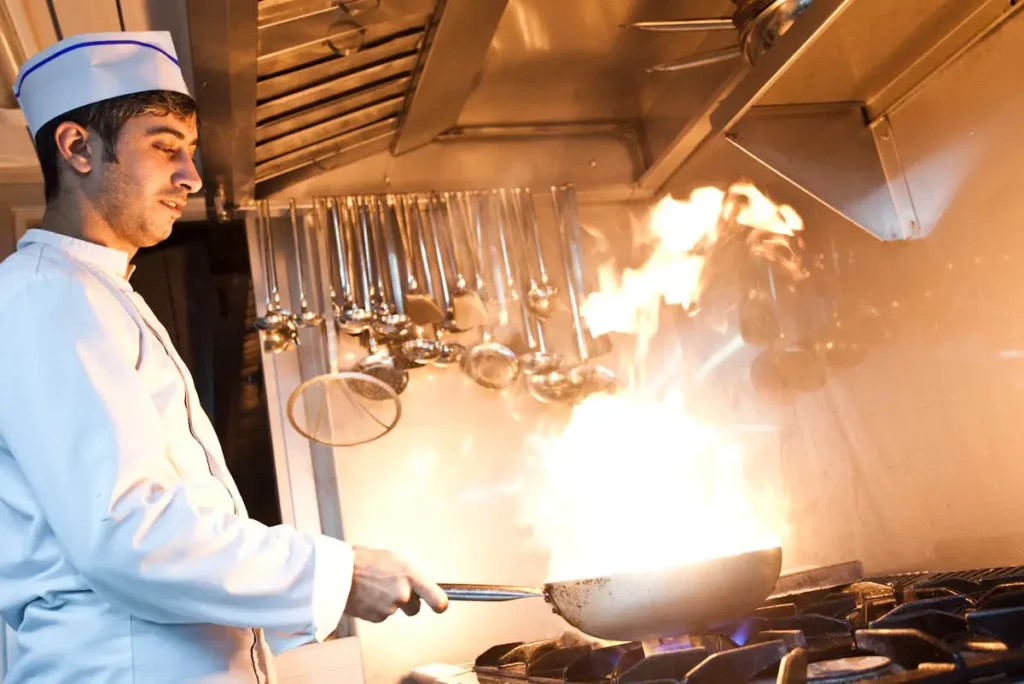
Professional cooking is often misunderstood as a collection of techniques. In reality, what separates professional kitchens from home cooking is not skill alone—it’s decision-making.
Professional cooks are constantly making small decisions under pressure: when to turn the heat down, when to wait, when to intervene, and when to leave food alone. These decisions are rarely dramatic, but they determine consistency.
This article supports the pillar How Professional Cooking Methods Improve Everyday Home Cooking by focusing on how professionals think while cooking—and how adopting that decision framework makes home cooking calmer and more reliable.
Why Decision-Making Is the Hidden Skill in Professional Cooking
In restaurant kitchens, cooks rarely follow instructions step by step. Service moves too fast, conditions change constantly, and ingredients are never identical. Instead of instructions, professionals rely on judgment.
That judgment isn’t instinct. It’s structured decision-making built from experience, systems, and feedback.
Key idea: Professional cooking is not about knowing what to do. It’s about knowing when to do it—and when not to.
Why home cooking often feels reactive
Home cooks frequently describe cooking as “fixing things.” Something browns too fast, seasoning feels off, timing slips, or a pan gets crowded. By the time the issue is noticed, the cook is already reacting.
Professionals avoid this pattern by making decisions earlier and more often, which keeps them in control instead of in recovery mode.
Professionals Cook Toward Outcomes, Not Instructions
One of the biggest differences between professional and home cooking is that professionals cook toward outcomes. They decide what the food should become before worrying about how to get there.
Outcome-first thinking
Instead of thinking “I’m following this method,” professionals think: “I want this browned but not dry,” or “I want this sauce smooth and stable.” Once the outcome is clear, decisions become simpler.
This is why professional cooking methods are flexible. They adapt to the goal rather than enforcing rigid steps, as explained in the pillar article on professional cooking methods.
Why instructions fail under pressure
Instructions assume perfect conditions. Professional kitchens assume conditions will change. Decision-making bridges that gap.
When home cooks rely only on instructions, any deviation feels like failure. Professionals treat deviation as information.
Professional Decision-Making Is Supported by Habits and Systems
Good decisions don’t happen in isolation. They are supported by habits and systems that reduce cognitive load.
This is where your first two supporting articles fit naturally into the cluster.
Habits reduce decision fatigue
Professional cooks rely on habits to eliminate unnecessary decisions. Where tools live, when to taste, how to clean—these defaults preserve attention for food-related judgment.
This is explored in Professional Cooking Habits That Make Home Cooking Easier and More Consistent.
Systems prevent decision overload
Professional cooking systems are designed to prevent predictable mistakes. When the system works, cooks are free to make better decisions, not more decisions.
That structural support is covered in How Professional Cooking Systems Reduce Mistakes in Home Cooking.
Important distinction: Habits shape behavior. Systems shape environment. Decision-making happens on top of both.
Professionals Make Decisions at Predictable Moments
Professional cooks don’t constantly question everything. They check in at specific moments when decisions matter most.
Decisions happen at state changes
Professionals pay attention when food changes state: after browning, after adding liquid, after reduction, before finishing. These are decision points, not guesses.
This timing allows small corrections instead of late rescues.
Why tasting is a decision tool, not a correction
Professionals taste to confirm direction, not to fix failure. Early tasting informs whether to continue, adjust, or wait.
This logic depends heavily on understanding ingredient behavior, which is explored further in How Ingredients Behave in Professional Kitchens and Why It Matters at Home.
Decision Quality Depends on Kitchen Context
Even good cooks make poor decisions in unstable environments. Professional kitchens are designed to support clear thinking.
Why environment shapes judgment
Crowded counters, missing tools, and unclear workflows increase mental friction. Professionals reduce this friction deliberately.
This is why commercial kitchens prioritize layout, flow, and station logic, as explained in How Commercial Kitchen Systems Improve Speed, Safety, and Quality.
Tools as decision support, not shortcuts
Professionals choose tools that support judgment: pans that respond predictably, knives that feel consistent, and equipment that reduces uncertainty.
This mindset is detailed in How Chefs Choose Kitchen Tools and What Home Cooks Should Look For.
How Home Cooks Can Adopt Professional Decision Logic
You don’t need to think like a chef all the time. You only need to think like one at the right moments.
Decide the outcome before heat goes on
Before cooking, answer one question in plain language: “What do I want this food to be?” This single decision simplifies everything that follows.
Identify the critical moment
Every dish has a moment where attention matters most. Identify it in advance and protect it from distractions.
Use feedback instead of judgment
When something feels off, treat it as information. Professionals don’t panic—they adjust direction.
Professional mindset: Good cooking decisions are not about control. They are about awareness at the right time.