
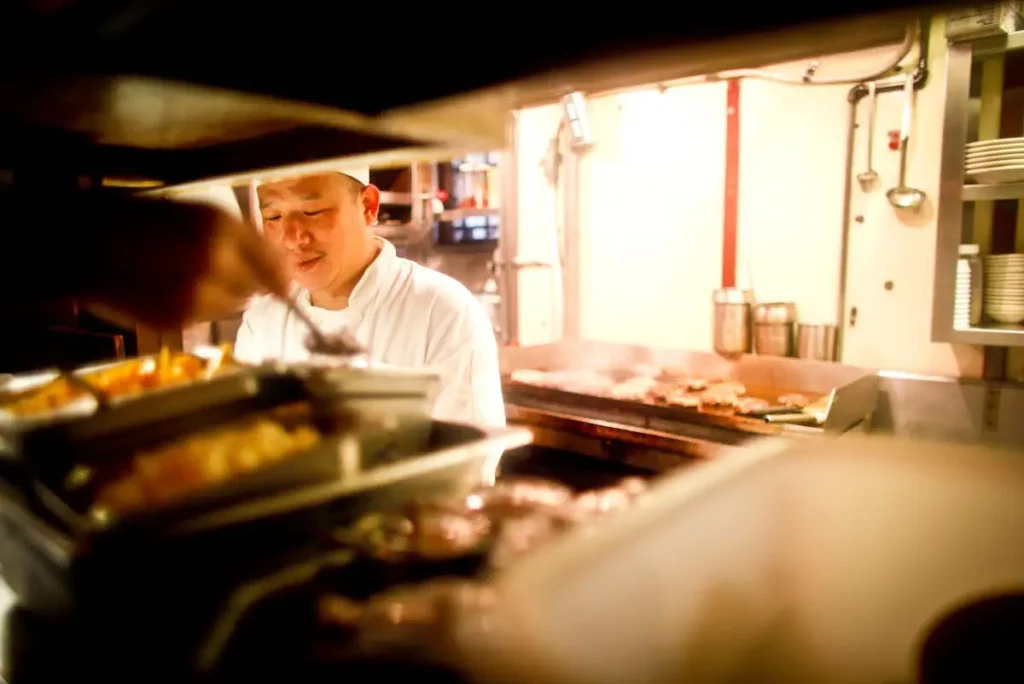
Most people think tools improve cooking by improving results: sharper knives, better pans, cleaner cuts, nicer sears. That’s partly true. But in professional kitchens, tools earn their place for a different reason: they protect workflow.
When a tool fits the workflow, cooking feels smooth. Steps happen in the right order, transitions are clean, and timing stays under control. When a tool fights the workflow—even if it’s expensive—cooking becomes stop-and-go. You pause, adjust, clean, search, or compensate. Those small interruptions are where mistakes and stress come from.
This article supports the pillar How Chefs Choose Kitchen Tools and What Home Cooks Should Look For by zooming in on a specific idea: tools don’t just affect food. They shape the way you move through cooking.
Working definition: A “good tool” is one that keeps the next step easy. Efficiency is less about speed and more about fewer interruptions.
Workflow Is Where Home Cooking Usually Breaks Down
Home cooking rarely fails because someone doesn’t know what to cook. It fails because the process becomes unstable: the pan gets too hot while you look for a spoon, the cutting board slides, the lid doesn’t fit, the knife tears instead of cutting, the sink fills early, and suddenly you’re reacting instead of cooking.
In restaurant kitchens, workflow is protected deliberately. The environment is designed to reduce friction. At home, workflow is often accidental. Tools are chosen one by one without thinking about how they work together. That’s why you can own “good” tools and still feel like cooking is chaotic.
If you’ve been building your cooking skills through professional logic, this will sound familiar: consistency comes from reducing variables. Your methods pillar explains that well: How Professional Cooking Methods Improve Everyday Home Cooking. Tools are one of the biggest variables in the home kitchen—especially when they interrupt timing.
Professional Kitchens Choose Tools That Remove Micro-Interruptions
A micro-interruption is a small pause that breaks flow: twisting a handle to “unlock” a feature, scraping stuck residue, searching for a tool, adjusting a lid, wiping a board that won’t stay put. Each interruption is small, but cooking contains many steps. Over a week, micro-interruptions become a pattern. That pattern is what makes cooking feel tiring.
Micro-interruptions lead to late decisions
Most “mistakes” happen when decisions are made late: seasoning at the end, adjusting heat too late, realizing something needs prep mid-cook. Professionals reduce late decisions by keeping the workflow clean. This connects directly to your systems support article: How Professional Cooking Systems Reduce Mistakes in Home Cooking. Tools are part of that system. The right tools quietly prevent mistakes by keeping attention available.
Tools That Support Workflow Have Three Traits
You don’t need dozens of tools to cook like a professional. You need a small set that behaves predictably. The tools that support workflow tend to share three traits: stable behavior, easy handling, and low maintenance friction.
1) Stable behavior
A stable tool behaves the same way every time. A pan heats in a predictable pattern. A knife cuts cleanly instead of tearing. A spatula stays firm. A measuring spoon doesn’t flex. Stability reduces the need for constant adjustment.
If you want the deeper evaluation logic behind this, your first support article breaks it down in detail: Professional Criteria for Evaluating Kitchen Tools (Beyond Brand Names).
2) Easy handling in motion
Workflow is movement. Handling matters because cooking is full of carrying, transferring, scraping, turning, and plating. Tools that are awkward in motion force you to slow down or “brace” yourself. That bracing shows up as messy cuts, uneven browning, and more spills than you’d expect.
3) Low maintenance friction
Tools that are hard to clean or maintain create pressure later in the cook. If you know something will be annoying to wash, you subconsciously avoid it, delay cleanup, and clutter your station. That clutter interrupts workflow at the worst time: the finish.
Workflow Isn’t Just Cooking. It’s the Order of Work
Home cooks often think “workflow” means doing things faster. In professional kitchens, workflow means doing things in an order that protects timing and attention. Tools influence that order because they either support smooth transitions—or force awkward pauses.
Transition 1: Prep to heat
The prep-to-heat transition is where many home meals start to drift. If your knife is dull, prep takes longer and your timing becomes rushed. If your board slides, you cut more carefully and lose rhythm. If your prep tools are scattered, you waste attention looking for them.
This is why professionals care so much about prep flow. It’s not about perfection. It’s about starting cooking with momentum, not stress. If you want the habit version of this idea, your first cluster support is relevant: Professional Cooking Habits That Make Home Cooking Easier and More Consistent.
Transition 2: Heat to add
Once heat is involved, time compresses. Tools that delay the “add” step create problems quickly. A lid that doesn’t fit leads to heat loss and longer simmer times. A pan that’s too small forces crowding, which causes steaming instead of browning. A flimsy spatula turns “flip” into “fight,” which pushes you into rushed corrections.
Professionals choose tools that make common moves easy: stirring, flipping, scraping, lifting, draining. When those moves are easy, the cook can pay attention to doneness and texture.
Transition 3: Cook to finish
Finishing is where workflow matters most. You’re tasting, adjusting, plating, and cleaning the last mess. Tools that create extra cleanup—sticky coatings, awkward corners, fragile materials—make finishing feel crowded. That’s when people over-salt, over-reduce, or rush plating just to be done.
Practical truth: If your finish is always messy, your tools may be creating friction earlier than you realize. Workflow problems show up at the end.
The “Station” Concept: Why Placement Is Part of Tool Choice
In professional kitchens, tools are not just chosen—they are placed. Placement is part of the system. The cook should be able to reach what they need without thinking, especially when hands are wet or heat is high.
At home, the simplest upgrade is to build a small “station” logic: one clear cutting area, one scrap area, one towel, one spoon rest, and your salt where you can reach it quickly. This doesn’t require a large kitchen. It requires consistency.
Tools that support station logic
Choose tools that naturally fit into a station. Examples: a board that stays put, a bowl that can hold scraps, a spoon that rests cleanly, tongs that lock easily and don’t spring open unpredictably. These aren’t glamorous purchases, but they protect flow.
This is the same thinking restaurants use to maintain consistency through service: How Restaurants Maintain Consistency During Daily Service. Even at home, your station is either helping you or draining you.
Why “Versatile” Tools Often Slow You Down
Many home kitchens are filled with tools designed to do many things. The problem is that versatility often adds complexity: extra parts, extra settings, extra cleaning steps, extra storage. Each extra step is a small tax on workflow.
Professional kitchens don’t avoid multi-use tools because they hate convenience. They avoid them because they value predictability. A tool that does one job cleanly and repeats that job reliably is often the best workflow tool.
Versatility isn’t the enemy—uncertainty is
If a multi-use tool behaves predictably and is easy to maintain, it can be excellent. But many “all-in-one” tools introduce uncertainty: they work differently depending on setup, attachments, or cleaning. Uncertainty leads to hesitation. Hesitation breaks timing.
How Tools Quietly Influence Cooking Decisions
Tools shape the decisions you make while cooking. That sounds abstract, but it shows up in simple ways. If a pan browns unevenly, you move food constantly and lose sear quality. If your knife is dull, you avoid certain prep and choose easier meals. If cleanup is painful, you pick methods that feel “safer,” even if they’re less satisfying.
Professionals don’t separate tools from decision-making because they understand how tightly they’re linked. That mental layer is explored in your decision-focused support article: How Professional Cooks Make Better Decisions While Cooking (And Why It Matters at Home). A predictable tool makes better decisions easier.
A Simple Way to Audit Your Kitchen for Workflow Problems
You don’t need to buy new tools to learn from this article. Start by auditing what interrupts you. The easiest approach is to notice where cooking slows down unexpectedly.
Ask three questions during your next cook
- What made me stop? (searching, cleaning, adjusting, fixing)
- What felt awkward in motion? (lifting, flipping, draining, scraping)
- What created mess early? (spills, scraps, splatter, clutter)
The answers usually point to tool friction. Sometimes that friction is a tool problem. Sometimes it’s a placement problem. Often it’s both.