
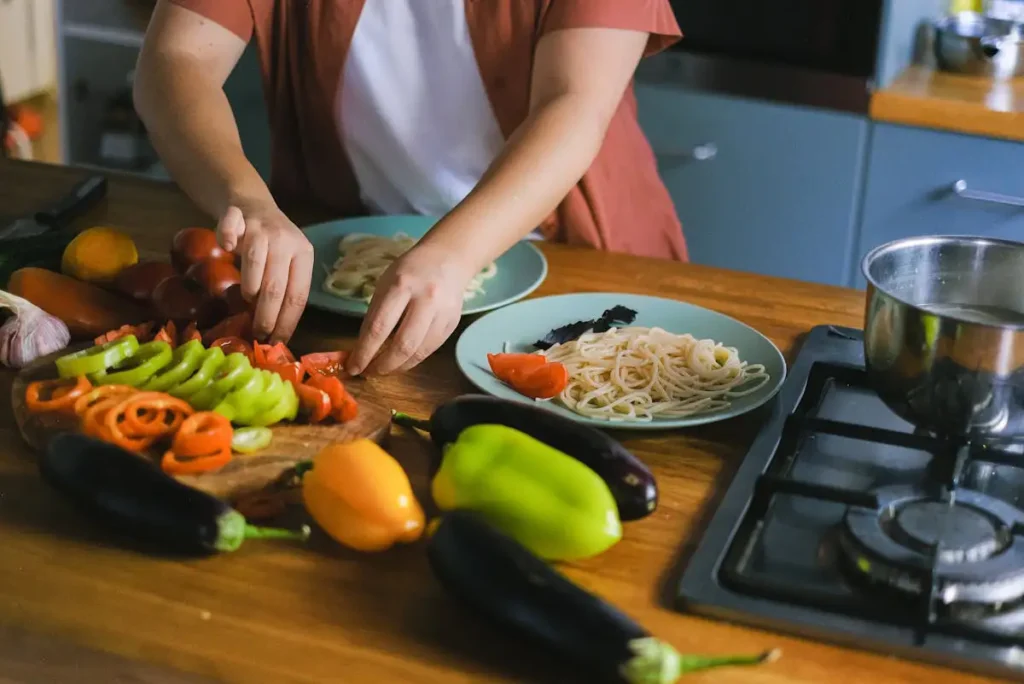
Recipes assume ingredients behave the same every time. Professional kitchens assume they don’t.
Tomatoes are sweeter in late summer. Chicken breasts vary in thickness. Potatoes hold different amounts of moisture depending on storage. Herbs lose strength as they sit.
This mindset builds directly on the pillar How Ingredients Behave in Professional Kitchens and Why It Matters at Home. Ingredients aren’t constants. They shift. Professionals cook with that expectation.
Core shift: Instead of asking “What does the recipe say?” professionals ask, “What is this ingredient doing today?”
Why Ingredients Are Never Identical
Two carrots from the same bag can cook differently. One may be slightly drier. One slightly denser. That small difference affects softness and sweetness.
Produce changes with season, storage, and handling. Proteins vary by size and fat content. Even dry goods absorb moisture from the air over time.
Professionals expect this variation. Home cooks are often surprised by it.
Seasonal Changes Affect Flavor and Structure
In peak season, vegetables carry more natural sweetness and balanced moisture. Out of season, the same ingredient may be firmer or less aromatic.
How professionals respond
If tomatoes are watery, they may be salted earlier or cooked longer to concentrate flavor. If greens are mature and slightly tough, heat may be adjusted or cooking time extended.
The goal isn’t perfection. It’s adjustment.
Size Differences Change Cooking Speed
Even when cut evenly, proteins and vegetables vary in thickness. A thicker chicken breast won’t cook like a thinner one.
This connects directly to Ingredient Preparation in Cooking. Preparation reduces variability, but it can’t eliminate it completely.
Professional response
Instead of trusting the clock, professionals check texture. They press gently. They observe color shift. They listen for sound changes in the pan.
This kind of observation links back to How Heat Changes Ingredients. Heat transforms in stages, and professionals watch those stages closely.
Moisture Differences Change Browning
A mushroom stored for several days releases more water than one just purchased. A chicken thigh that was frozen may release moisture differently when thawed.
Professionals adapt by adjusting batch size or pan temperature. They don’t assume yesterday’s result guarantees today’s.
Home application
If browning stalls, pause and reassess. Is moisture building? Is the pan crowded? Small adjustments early prevent larger problems later.
Fat Content Affects Texture and Timing
Not all meat carries the same fat distribution. Some cuts render slowly. Others release fat quickly.
Professionals observe how fat behaves under heat and adjust accordingly. Lower heat for gradual rendering. Higher heat for crisping when structure allows it.
Salt Absorption Changes with Freshness
Salt penetration depends on structure and moisture. A freshly cut piece of meat absorbs differently than one that has rested uncovered in the refrigerator.
Professionals don’t measure blindly. They taste. They understand salt works over time, as explained in the main ingredient pillar.
Why Observation Beats Strict Timing
Professional cooking is built on observation. They don’t abandon recipes. They refine them.
Timers are checkpoints, not rules.
Texture, aroma, color, and sound guide final decisions. This same mindset is explored in How Professional Cooks Make Better Decisions While Cooking.
How to Start Adjusting Like a Professional
You don’t need advanced training to cook this way. You need awareness.
Three simple habits to build
1) Taste earlier. Don’t wait until plating.
2) Watch moisture. Notice steam and surface dryness.
3) Adjust heat gradually. Small corrections prevent large swings.
The goal isn’t constant correction. It’s steady awareness.
Final takeaway: Ingredients vary. Professionals expect that variation and respond calmly. When you cook with observation instead of rigid timing, consistency becomes easier.