
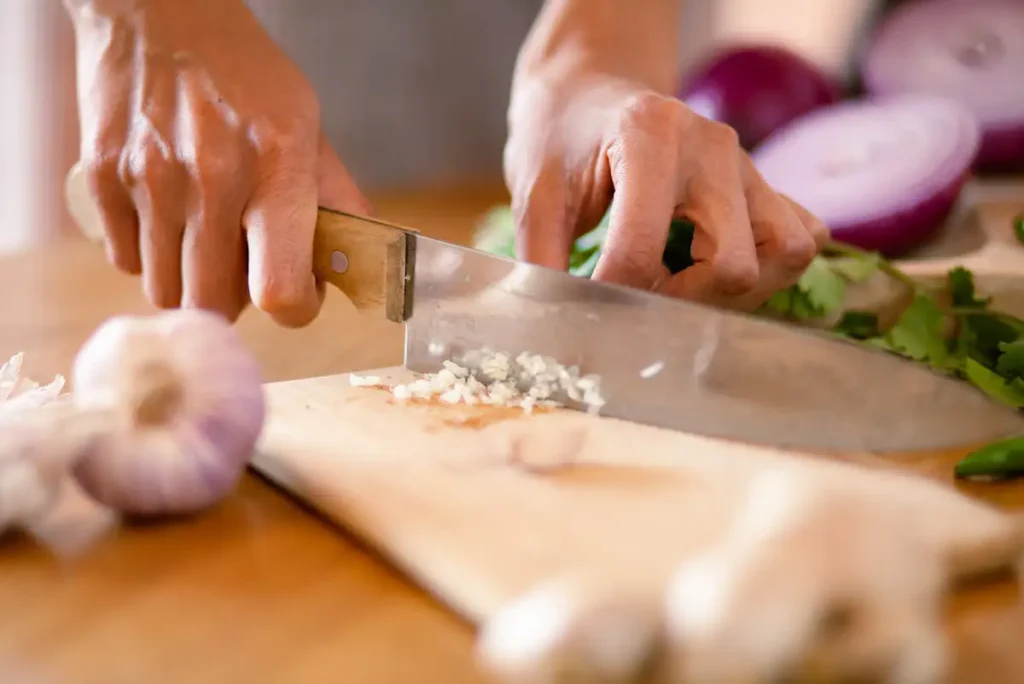
Home cooks often treat prep as “getting ready.” Chop the onion, mince the garlic, rinse the chicken, and then the real cooking begins. In professional kitchens, prep is not a warm-up. It’s where outcomes are set.
The way an ingredient is cut, dried, salted, or held on the counter changes what it will do once heat hits it. That’s why two people can cook the “same” dish and get different results without changing the recipe at all.
This article supports the pillar How Ingredients Behave in Professional Kitchens and Why It Matters at Home by focusing on one idea: preparation is not separate from cooking. Prep is the first part of cooking, because it changes how ingredients behave.
Professional framing: Prep is about conditions. Cut size, surface moisture, and timing decide whether food browns, steams, toughens, or stays tender.
Cut Size Changes Heat Speed (and Texture)
When professionals care about consistency, they pay attention to cut size. Not for aesthetics. For physics. Smaller pieces cook faster because heat reaches the center quickly. Larger pieces change more slowly and hold onto moisture longer.
Why uneven cuts create uneven results
If you have small and large pieces in the same pan, you don’t really have one cooking process. You have two. The smaller pieces brown sooner, soften sooner, and can dry out while the larger pieces are still catching up.
That’s why “it’s somehow both overcooked and undercooked” happens in home kitchens. The issue isn’t technique. It’s mixed sizes fighting for the same heat.
How to apply it without becoming obsessive
You don’t need perfect cubes. You need the pieces that will cook together to be in the same neighborhood. If one carrot piece is twice the thickness of another, they will not finish together. Professionals reduce that variation because timing matters.
This is also why many restaurant vegetables feel consistent even with simple seasoning: the heat hits them evenly, so texture is controlled.
Surface Moisture Decides Browning
One of the biggest gaps between professional and home cooking is moisture management. Home cooks often place wet ingredients into a pan and then wonder why browning doesn’t happen. Professionals expect moisture to be dealt with first.
Why wet food steams
Browning needs a relatively dry surface. Water must evaporate before the surface temperature climbs high enough to brown. If the ingredient surface is wet—or the pan is crowded—evaporation becomes slow. The food steams in its own moisture.
If you want the deeper “what heat is doing” side of this, it connects directly to: How Heat Changes Ingredients: Texture, Moisture, and Structure. Moisture controls how heat expresses itself.
Small prep habits that change results fast
Pat proteins dry before searing. Let washed vegetables drain thoroughly. If something is watery by nature (mushrooms, zucchini), expect moisture release and cook in batches when needed. This is not extra work. It’s making browning possible.
Professionals don’t view this as “being fussy.” They view it as protecting the method. If browning is the goal, moisture has to be managed.
Salt Timing Changes Texture, Not Just Flavor
Most home cooks think of salt as a final adjustment. Professional kitchens treat salt as something that works over time. Salt draws moisture, seasons beneath the surface, and changes texture as it moves.
Why early salting feels “more seasoned”
When salt is added early, it has time to dissolve and travel. The ingredient tastes integrated because the seasoning isn’t sitting only on the surface. In proteins, early salting can also improve how moisture behaves during cooking.
Your pillar explains this clearly in the “salt penetration over time” section. The takeaway is simple: timing shapes effect.
When late salting is useful
Late salting isn’t wrong. It’s just different. It stays more on the surface and reads as sharper. That can be useful when you want a bright finishing edge—like on roasted vegetables, fries, or fresh tomatoes.
Professionals don’t choose early or late salting based on rules. They choose based on the result they want.
Prep Timing Changes Freshness and Flavor
A common home habit is to prep everything early to “be organized.” Sometimes that helps. Sometimes it quietly hurts the food. Ingredients begin changing the moment they’re cut or exposed to air.
What changes when you prep too early
Herbs lose aroma. Cut onions soften and become more pungent. Garlic can dry out or turn harsh. Watery vegetables can weep and become limp.
In professional kitchens, prep is timed to how ingredients decline. Some things can be cut early (carrots, celery). Others are best closer to cooking (herbs, garlic, delicate greens).
Home rule that works: Prep early for stability. Prep late for fragrance. Stable items (roots, aromatics like onion) hold. Fragile items (herbs, garlic) fade.
Temperature Before Cooking Matters More Than People Think
Professionals pay attention to ingredient temperature because it affects control. Cold ingredients lower pan temperature and slow browning. Warm ingredients cook more evenly and respond faster.
This doesn’t mean leaving meat out for hours. It means understanding that a fridge-cold protein will behave differently than one that’s had a few minutes at room temperature. Professionals factor that into timing instead of being surprised by it.
Practical home approach
If you’re searing, give proteins a short window to lose the chill while you prep other items. Focus on safety, but don’t ignore behavior. The goal is predictable heat response.
Preparation Is Where Workflow Becomes Calm
One reason professionals value preparation is that it reduces decision pressure later. When ingredients are cut consistently, dried appropriately, and staged in the order of use, cooking becomes execution, not negotiation.
This ties directly to the way professionals build stable cooking systems. If you want that bigger picture, it connects well with: How Professional Cooking Systems Reduce Mistakes in Home Cooking. Systems reduce surprises. Prep is one of the quietest systems.
Where to Start (Without Overcomplicating Your Cooking)
If you want the fastest improvement, don’t change everything at once. Pick one prep variable and control it for three meals.
Three high-impact starting points
1) Cut sizes: keep similar pieces together so they finish together.
2) Drying: pat proteins dry and avoid overcrowding when browning matters.
3) Salt timing: try salting earlier and notice how flavor and texture change.
These aren’t chef tricks. They’re ingredient behavior realities. Once you see them working, prep stops feeling like extra work and starts feeling like control.
Final takeaway: Preparation isn’t separate from cooking. It sets the conditions that decide how heat, salt, and time will reshape your ingredients.