
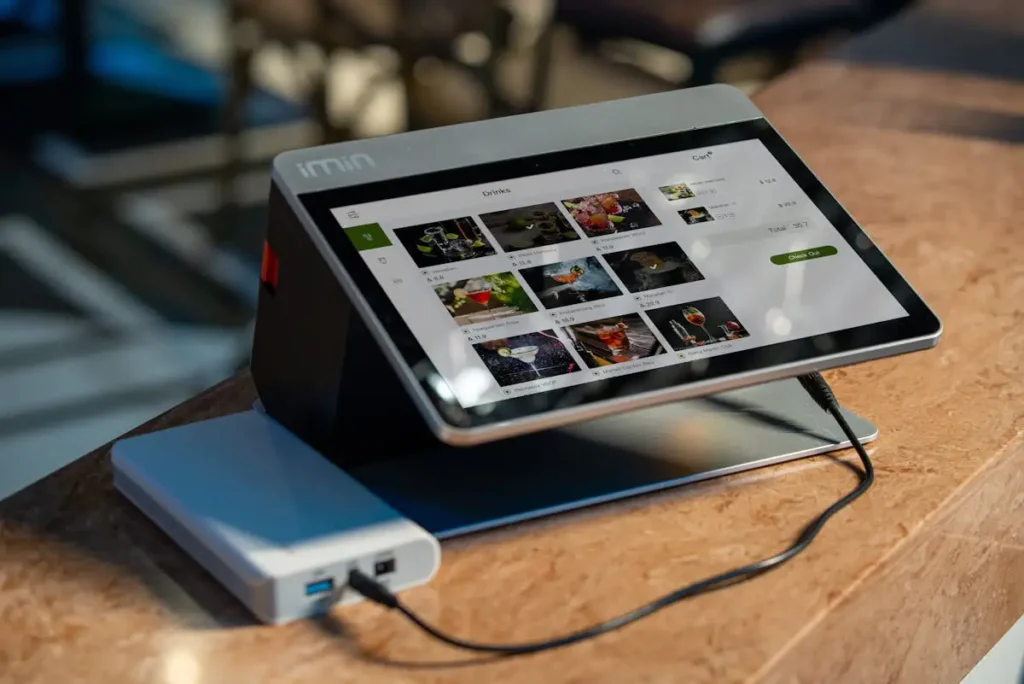
Restaurant technology is often discussed as if it creates better service by itself. New systems get framed as upgrades, and problems get treated as something software can solve. In day-to-day operations, technology plays a quieter role.
Good operations do not begin with technology. They begin with clear processes, stable standards, and predictable workflows. Technology can strengthen those structures by reducing manual tracking and lowering the memory load on staff.
This is what Restaurant Technology means on FoodiJunction. It is not trend talk or software reviews. It is a systems view of how technology supports stability when it is integrated into real operational rhythm.
What Technology Actually Does in Restaurant Operations
In restaurant operations, technology mainly manages information flow. It collects details, distributes them to the right place, and keeps them visible as conditions change.
Technology also reduces manual decisions and memory load. Operational stability improves when key details are carried by the system rather than held in individual memory.
Timing, coordination, and visibility are where technology has its most practical effect. When the same information is seen by the people who need it, tasks align more easily.
This is why technology follows process, not the other way around. When the underlying workflow is clear, technology can reinforce it by making information move in the same shape as the work.
How Technology Supports Consistency and Coordination
Technology supports consistency by making the same information visible to everyone who needs it, at the same time. In restaurants, coordination breaks down when different roles are operating from different versions of reality. When information is synchronized, fewer decisions are made on guesswork, and service becomes more predictable even when conditions shift.
Shared visibility reduces miscommunication because it lowers the need to translate work through layers of conversation. Many operational errors are mismatches in timing, status, or priority. When updates are seen directly, the message doesn’t depend as much on who heard it or whether it was repeated.
This alignment matters most between front and back of house because their priorities are different but interdependent. Technology can support coordination by keeping these two rhythms connected through consistent signals. The result is fewer moments where the dining room has to improvise explanations or the kitchen has to absorb surprise demand.
Consistency improves when information is synchronized because the operation spends less time correcting itself. Less energy goes into chasing missing details, clarifying status, or restarting tasks that were based on outdated assumptions. The restaurant can adapt in real time without the experience drifting, because the system keeps everyone oriented to the same moving situation during daily service operations.
Where Technology Creates Friction Instead of Stability
Technology is not neutral in service. It changes the shape of work, and it can add strain when it doesn’t match how the restaurant actually runs. The most common friction appears when the system assumes a workflow that isn’t real.
Added steps are small on paper but heavy during service. When a task requires extra confirmations, repeated inputs, or switching between screens and stations, it interrupts rhythm. People begin to work around the system to keep pace, which creates gaps between what the system says and what is actually happening.
Overreliance can create another kind of friction. When staff treat the system as the only source of truth, judgment can narrow. A restaurant still operates in a physical environment where conditions change, and the operation can become slower to adapt when people wait for the interface to catch up.
Information overload is the final pressure point. Technology can make more data visible, but visibility is not the same as clarity. When screens present too many signals at once, staff spend more attention sorting what matters.
Why Technology Is a Support System, Not a Substitute for Operations
Technology strengthens what already exists in a restaurant because it follows the shape of the work. When processes are clear and responsibilities are stable, technology can reinforce that stability by making information easier to share, easier to confirm, and harder to lose.
When operations are unclear, technology cannot replace the missing structure. It can record confusion and distribute it faster, but it cannot decide what standards should be, who owns which handoff, or what the workflow is meant to protect.
Good operations do not become flashier through technology. They become more consistent. The restaurant still depends on judgment, because judgment is what handles the edge cases and the human realities of service.
In the end, technology belongs in the same category as any other operational support: it works when it reduces uncertainty without removing responsibility. The restaurant remains a set of people executing a system in real time.