
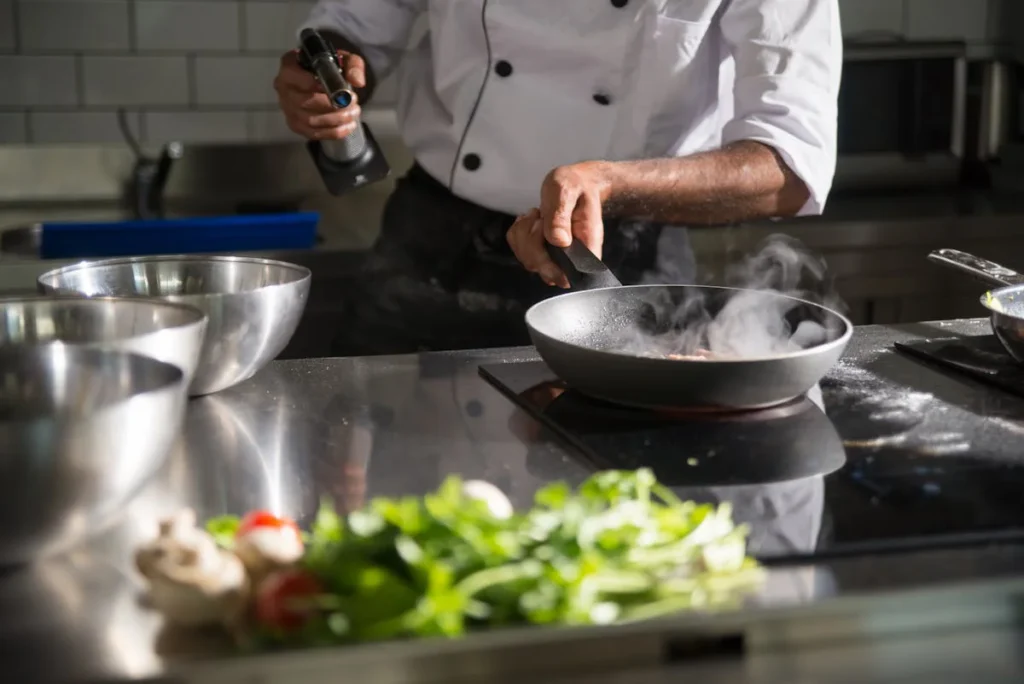
Home cooking feels a lot simpler when you start thinking the way professional cooks do in real kitchens. Chefs don’t rely on instinct alone or make decisions on the fly. They follow clear methods built around preparation, timing, and control.
When those same principles are applied at home, cooking becomes more predictable. Meals come together with less stress, ingredients are used more efficiently, and results improve without needing complex recipes. Professional cooking methods are built on three foundations: repeatable habits, supportive systems, and better decision-making under heat. When these elements work together, cooking becomes calmer, more consistent, and easier to improve over time.
What Professional Cooking Methods Actually Are
Professional cooking isn’t about improvising as you go. In a real kitchen, each step is there for a specific reason. Tasks are planned in advance so nothing slows down once cooking starts.
Preparation is where the difference becomes obvious. In professional kitchens, most of the work is done before the stove is even on. Vegetables are already cut, proteins are portioned, and the tools are where they need to be. Cooking stays focused on heat and timing, not stopping to hunt for a knife or realizing something still needs prep.
Consistency matters just as much. Professionals cook the same way on purpose. Ingredients are handled the same, heat is managed the same, and steps follow a familiar order. Instead of fixing problems as they pop up, most of them never happen in the first place because the process stays the same.
Professional Techniques Home Cooks Can Apply Today
Professional kitchens rely on habits that make cooking smoother and more predictable. Most of these habits translate easily to home cooking without changing what you cook or how often you cook.
Many of these patterns come from repeatable behaviors used daily in professional kitchens, which are explored further in Professional Cooking Habits That Make Home Cooking Easier and More Consistent.
Knife Prep and Prep Efficiency
Good knife work isn’t about speed. It’s about control and consistency. Cutting ingredients into similar sizes helps them cook evenly and reduces last-minute adjustments on the stove.
Prepping vegetables, proteins, and aromatics before cooking also clears mental space. When everything is ready, cooking becomes a series of simple steps instead of a rush to keep up with heat and timing.
Batch Preparation and Smart Storage
Professionals don’t prep for a single meal and call it done. They wash greens, cut onions, and cook grains in larger amounts so that work carries over. The payoff is simple. Less setup every time they cook.
At home, this might mean chopping vegetables once and using them across a few meals, or cooking a pot of rice that shows up in different ways during the week. Dinner comes together faster, and you’re not starting from zero every night.
Temperature Awareness During Cooking
Heat control is one of the biggest gaps between professional and home cooking. Chefs don’t lock the burner at one setting and hope for the best. They watch the pan and adjust as they go.
You can do the same thing at home. Let the pan heat before adding food. Turn the heat down when something browns too fast. Small adjustments like this change how food cooks, and the difference shows in texture and flavor.
Simple Workflow Habits That Reduce Mistakes
Professionals don’t cook randomly, even when the dish is simple. They know what goes into the pan first, what comes next, and how the steps overlap.
At home, this can be as basic as reading the recipe once before you start or thinking through the steps while you prep. When you know what’s coming, cooking feels steadier and fewer things go sideways halfway through the meal.
Professional Cooking Is Built on Systems, Not Talent
Professional cooks are not “just better” by nature. They are trained to reduce choices during service. They do this by setting up the same steps, in the same order, every day. That system protects consistency. It does not kill creativity. It creates reliable results first, so creativity has a stable base.
At home, the same idea helps immediately. When you remove last-minute decisions, you cook with less stress. You waste fewer ingredients, you fix fewer mistakes, and you finish meals on time.
These systems exist to reduce predictable mistakes and protect consistency, especially under time pressure. A deeper look at how professional kitchen systems prevent errors is covered in How Professional Cooking Systems Reduce Mistakes in Home Cooking.
The Professional Methods That Improve Home Cooking the Most
These are foundation habits, not advanced tricks. You do not need new tools. You need a repeatable way to cook. Use one method for a week, then add the next.
Mise en place and prep flow
What it is
Preparing ingredients in the order you will use them, so cooking becomes execution instead of guesswork.
Why professionals rely on it
It removes decision-making when the heat is on, which keeps timing steady and prevents missed steps.
How to apply it at home
- Read the recipe once, then list the first three actions you will do.
- Prep items that take longest first (onions, carrots, raw chicken).
- Group ingredients by when they go in the pan, not by food type.
- For a one-pan dinner: chop veg, portion protein, measure sauce, then start cooking.
Where home cooks go wrong
Prepping everything hours early. Cut herbs, garlic, and watery vegetables too far ahead and they lose flavor, dry out, or get soggy. Prep close to cooking, and prioritize what saves you time during heat.
Heat control and pan management
What it is
Adjusting heat based on what you see and hear in the pan, not sticking to one burner setting.
Why professionals rely on it
It prevents burning, improves browning, and keeps texture consistent across batches.
How to apply it at home
- Preheat the pan before adding oil, then let the oil heat briefly.
- Start high for searing, then lower to finish cooking through.
- If food browns too fast, lower heat and spread items out.
- If the pan looks dry, add a small splash of water or stock and scrape the browned bits.
Where home cooks go wrong
Crowding the pan. Too much food drops the pan temperature and causes steaming instead of browning. Cook in two batches when needed. It is faster than trying to “fix” a pale, watery sauté.
Seasoning in stages and tasting
What it is
Adding salt and seasoning at key steps, then tasting and adjusting before the final plate.
Why professionals rely on it
It builds flavor evenly, so the dish tastes balanced without needing heavy sauce at the end.
How to apply it at home
- Salt proteins before cooking when you have time (even 10 minutes helps).
- Season vegetables as they cook, not only at the end.
- Taste the sauce or broth before serving, then adjust with salt or acid.
- Add fresh herbs and citrus at the end for brightness.
Where home cooks go wrong
Waiting until the last minute to season, then over-salting to catch up. If you build seasoning early, you can make smaller adjustments later.
Cooking by doneness cues, not time
What it is
Using visual and texture cues to decide when food is done, instead of trusting the timer alone.
Why professionals rely on it
Ingredients vary. Cues stay reliable even when size, moisture, or pan heat changes.
Professional cooks rely on judgment rather than instructions, making small decisions based on what the food is doing in real time—a skill explored further in How Professional Cooks Make Better Decisions While Cooking.
How to apply it at home
- Chicken: look for clear juices and firm texture, not wobble.
- Pasta: taste one piece. It should be tender with slight bite.
- Vegetables: check color and resistance with a fork, not minutes.
- Eggs: watch how the surface sets, then remove slightly early.
Where home cooks go wrong
Treating time like a rule. Use time as a checkpoint, then confirm with your senses. This one shift prevents a lot of dry meat and mushy vegetables.
Timing and task sequencing
What it is
Starting tasks in an order that lets everything finish together, with fewer idle gaps.
Why professionals rely on it
It keeps service smooth and prevents “one thing is done, one thing is raw” problems.
How to apply it at home
- Start slow-cooking items first (rice, potatoes, oven-roasted veg).
- Use waiting time for prep, cleanup, or the next step.
- Finish quick items last (greens, herbs, pan sauces).
- Decide your serving time, then work backward.
Where home cooks go wrong
Starting everything at once. That creates stress and forces shortcuts. A better goal is overlap, not chaos. One item cooks while you prep the next.
Resting, holding, and finishing food
What it is
Letting cooked food settle, keeping it at a safe temperature, and finishing right before serving.
Why professionals rely on it
Resting improves texture, holding prevents last-minute rushing, and finishing keeps flavor fresh.
How to apply it at home
- Rest meat 5 to 10 minutes after cooking before slicing.
- Keep food warm in a low oven while you finish the last item.
- Finish with one final step: a squeeze of lemon, herbs, or a small knob of butter.
- Plate hot food on warm plates when possible.
Where home cooks go wrong
Cutting too soon or serving “as soon as it’s done.” That often leads to dry slices and uneven heat. Resting is not wasted time. It is part of cooking.
A Simple Home Cooking Workflow Based on Professional Kitchens
Use this checklist for most meals
- Decide the dish
- Prep in order of use
- Preheat before cooking
- Cook with adjustments
- Finish and rest
Example: a 30-minute meal timeline
| Time | What you do |
|---|---|
| 0:00 to 0:05 | Start rice. Pat chicken dry, salt it, and set it aside. |
| 0:05 to 0:10 | Trim green beans. Mince garlic. Measure any sauce or seasoning. |
| 0:10 to 0:20 | Preheat pan, sear chicken, then lower heat to cook through. |
| 0:20 to 0:26 | Move chicken to a plate to rest. Sauté green beans in the same pan. |
| 0:26 to 0:30 | Taste and adjust seasoning. Finish with lemon or herbs. Plate and serve. |
When Professional Habits Can Make Home Cooking Worse
Systems help, but they can also get in your way if you treat every meal like a shift on the line. Home cooking should feel supportive, not stressful.
- Overthinking: If you are stuck planning, you are not cooking. Pick a simple dish and start.
- Chasing perfection: Not every dinner needs restaurant-level browning or plating.
- Turning weeknights into a performance: If the system adds pressure, scale it down.
Where to Start if You Want Better Results at Home
- Pick one method this week and use it for three meals.
- Start with prep flow or heat control. They give the fastest payoff.
- End each cook by asking: what one step caused the most stress?