
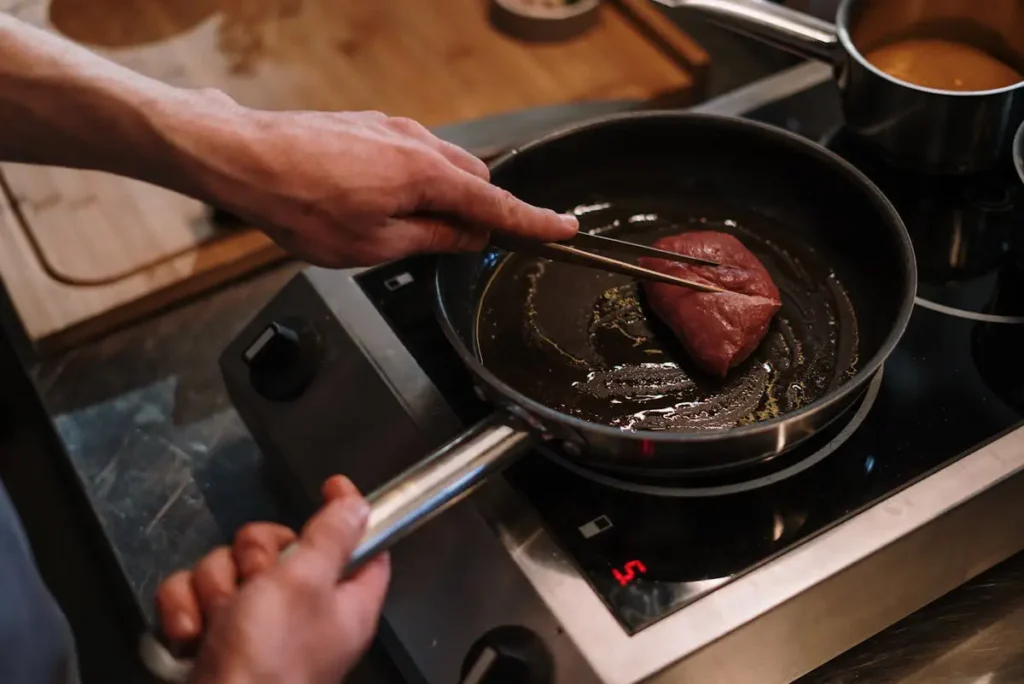
In professional kitchens, heat isn’t just something that makes food hot. It’s what changes food. Texture shifts. Moisture moves. Structure tightens or relaxes. Flavor develops in layers.
This way of thinking connects directly to the main pillar, How Ingredients Behave in Professional Kitchens and Why It Matters at Home. Ingredients aren’t fixed objects. They’re responsive. The moment heat is applied, they begin to reorganize.
Professional perspective: Heat doesn’t just cook ingredients. It transforms their structure. Understanding that transformation is what makes cooking predictable instead of frustrating.
Proteins Tighten and Release Moisture
When raw meat or fish goes into a pan, the change starts almost immediately. Proteins are loosely structured when cold. As heat rises, they begin to tighten. That tightening firms the flesh — and pushes moisture outward.
This is why chicken goes from soft to springy. Why steak firms up as it cooks. Why eggs shift from liquid to solid. It isn’t magic. It’s contraction.
Why dryness happens
Dryness isn’t always about poor ingredients. It’s usually about excessive tightening. When proteins contract too far, they squeeze out moisture that can’t return.
Professional cooks manage this by adjusting heat in stages — high enough to brown, low enough to finish gently. They don’t rely only on time. They watch resistance and surface change. That same decision control is explored in How Professional Cooks Make Better Decisions While Cooking.
Starches Soften Gradually, Not Instantly
Rice, pasta, potatoes, and flour all contain starch. When starch meets heat and moisture, it swells. The structure loosens. Texture softens.
But this doesn’t happen at once. It happens in stages.
Why texture varies
If starch doesn’t absorb enough water, it stays firm or chalky. If it absorbs too much and continues cooking, it breaks down and becomes mushy.
Professional kitchens don’t depend entirely on timers here. They taste. Texture tells you more than minutes.
This is part of broader heat control discussed in How Professional Cooking Methods Improve Everyday Home Cooking. Heat is rarely fixed. It’s adjusted to match what the ingredient is doing.
Moisture Determines Whether Food Browns or Steams
Moisture is one of the most overlooked variables in home cooking.
Water must evaporate before browning can happen. If ingredients release too much moisture at once — or if the pan is crowded — evaporation slows. Instead of searing, food steams.
Why overcrowding fails
When too much food is placed in a pan, temperature drops. Moisture builds. Surface drying stalls. Browning can’t begin until water clears.
Professionals avoid this by cooking in batches and managing spacing. Workflow discipline, like the kind discussed in How Kitchen Tools Shape Workflow and Efficiency in Home Cooking, helps protect that control.
Sugars Develop Flavor Under Dry Heat
When vegetables caramelize or meat forms a crust, sugar and amino acids are reacting under heat. This creates deeper flavor and darker color.
But these reactions require relatively dry surfaces and stable heat.
Why browning sometimes disappoints
If ingredients are wet, cold, or constantly moved, browning weakens. High heat alone isn’t enough. Surface condition matters.
Professionals dry proteins before searing and let vegetables sit undisturbed long enough to develop color. They understand that browning is a structural change, not just a cosmetic one.
Fat Melts, Carries Flavor, and Changes Texture
Fat behaves differently from water. It melts rather than evaporates. It carries flavor compounds and softens perception of texture.
In meat, fat renders and lubricates fibers. In sauces, it creates body.
Why too much heat disrupts balance
Aggressive heat can scorch fat before ingredients finish cooking. Lower, steady heat allows fat to integrate gradually.
Professionals think about when fat enters the process — not just how much. Timing shapes the outcome.
Heat Keeps Working Even After You Stop
One of the most misunderstood realities of cooking is that heat continues moving after food leaves the stove.
Proteins continue tightening. Moisture redistributes. Starches settle.
This is why resting matters.
Why resting changes texture
When meat rests, moisture spreads back through the structure. When sauces sit briefly, thickness stabilizes. When roasted vegetables cool slightly, surface crispness improves.
Skipping this step often makes food feel rushed, even if everything else was handled well.
Why Professionals Think About Structure First
Professional kitchens aren’t guessing what heat will do. They anticipate it.
They know proteins tighten. They know starches soften in phases. They know moisture must evaporate for browning. They know fat melts and spreads.
Because of that, cooking feels calmer.
Instead of reacting to dryness or lack of color, they prevent those outcomes by adjusting early.
What This Changes at Home
Once you understand how heat reshapes ingredients, mistakes feel less mysterious.
Dry chicken becomes a matter of contraction. Pale vegetables become a moisture issue. Mushy pasta becomes a starch breakdown problem.
You stop blaming the recipe. You start watching the ingredient.
Final takeaway: Heat changes structure in consistent, observable ways. When you cook with that awareness, results become easier to repeat — even when ingredients vary.