
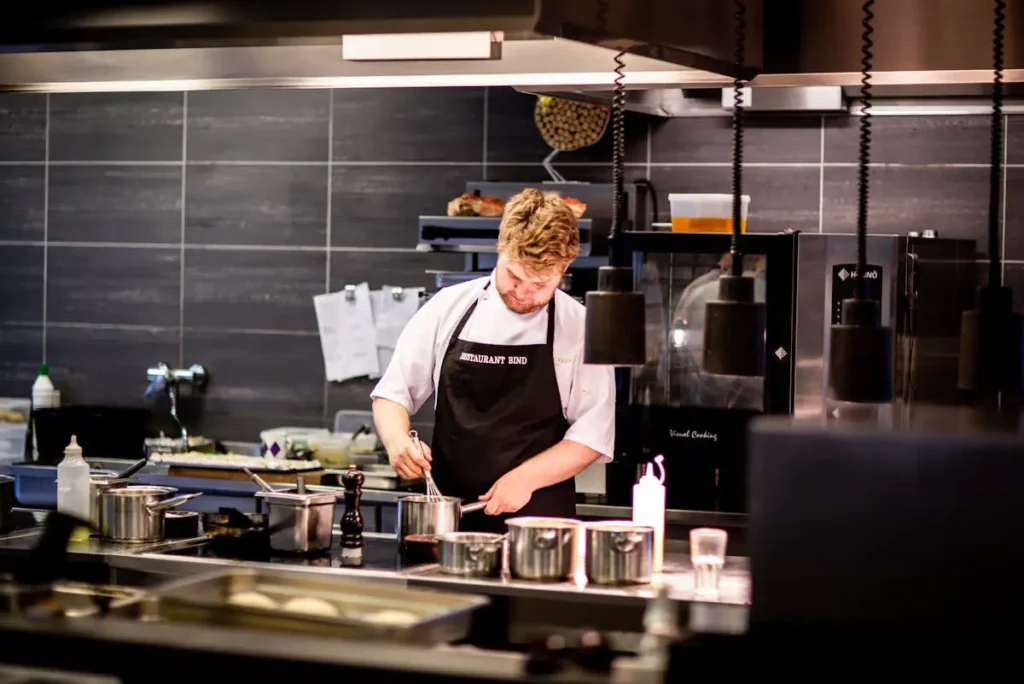
Food culture is often treated like identity. It gets reduced to cuisine labels, signature dishes, or what people feel proud of eating. In real kitchens, culture shows up in quieter ways. It shapes what feels normal to do without thinking. How ingredients are prepped, when seasoning happens, what gets saved, what gets thrown away, and what counts as “done.”
Those defaults matter because they stay in place even when conditions change. People move, schedules shift, new equipment appears, and ingredient access improves, but the underlying habits often remain. The same is true in restaurants. Professional kitchens operate with systems, but they still inherit assumptions about time, waste, hospitality, and what quality looks like.
Seeing food culture as behavior rather than identity makes it easier to understand why people cook the way they do, even when better methods exist. It also explains why changes in technique can feel oddly personal, even when the goal is simply a better result.
What Food Culture Really Means in Everyday Cooking
In everyday cooking, culture is less about what people cook and more about how they cook it. It lives in repeated behaviors that get reinforced over years, often without being named. These behaviors become defaults: how prep is organized, what gets washed or not, when heat is turned up or down, how seasoning is approached, and how timing is judged.
Because these patterns are learned early and repeated often, they tend to feel like common sense rather than choice. They create a baseline for what “proper” cooking looks like inside a household or workplace. That baseline influences decisions even when someone is trying a new recipe or using unfamiliar ingredients. The method may change on the surface, but the underlying habits keep steering the process, even when professional cooking methods would lead to more predictable results.
This is also why cultural defaults are hard to question. They don’t present themselves as rules. They present themselves as normal. When a new approach clashes with those expectations, it can feel wrong even before results are tasted. The friction isn’t always about technique. It’s about breaking a system that has quietly guided cooking for a long time.
How Food Culture Influences Home Cooking Habits
Food culture shows up at home through routine choices that rarely feel like choices. Prep is a clear example. Some kitchens treat prep as a separate phase with its own rhythm, while others fold it into cooking moment by moment. The difference often isn’t knowledge or effort. It’s what feels normal.
Time and convenience are shaped the same way. Not everyone measures cooking time by the clock. Many people measure it by how disruptive it feels. Whether shortcuts feel acceptable, whether a meal needs to be made from start to finish in one stretch, and whether cooking is expected to fit around other responsibilities all come from learned expectations.
Waste, leftovers, and reuse are also cultural behaviors, not just practical ones. Some households treat leftover food as planned value, something that belongs in the next meal. Others treat it as a compromise. Even the definition of “waste” shifts, and those judgments shape what people buy, cook, and save.
Improvisation is another point where culture sets boundaries. In some kitchens, changing a dish mid-cook feels natural, while in others it feels risky or inappropriate. That comfort level often comes from repeated exposure, not creativity.
How Food Culture Shapes Restaurant Kitchens Differently
Restaurant kitchens run on systems, but they don’t operate in a cultural vacuum. Even in highly structured environments, expectations about what good service looks like are inherited before they’re taught. Speed, pacing, and responsiveness aren’t only technical standards. They reflect assumptions about how guests should be treated, what waits are acceptable, and what the kitchen owes the dining room.
Attitudes toward waste and portioning follow the same pattern. Every kitchen manages cost and yield, but the line between acceptable loss and unacceptable waste is not purely mathematical. It is shaped by what the kitchen has been trained to notice, what management enforces, and what staff considers normal.
Culture also influences how consistency and flexibility are balanced. Some kitchens treat consistency as the primary promise, with variation viewed as risk. Others build flexibility into the system, allowing adjustment based on ingredient condition, service flow, or staff experience.
Training is where these expectations become durable. Formal procedures teach technique, but day-to-day reinforcement teaches what truly matters. Over time, culture and system become intertwined, not as personality, but as the operating logic that shapes how the kitchen moves.
Why Cultural Habits Persist Even When Better Systems Exist
Cultural habits persist because they reduce uncertainty. Familiar routines make cooking feel manageable, even when the routine isn’t the most efficient path. A known method offers predictability: the steps feel ordered, the timing feels safe, and the outcome feels understandable.
Social reinforcement keeps habits in place as well. Households develop shared expectations about what counts as normal food and normal effort. Restaurant teams do the same, just with clearer hierarchy. When many people repeat the same behaviors, the behavior gains authority.
Disruption carries a cost beyond time. In both homes and restaurants, changing a method can attract attention. Attention can lead to questions, corrections, or judgment. That pressure makes experimentation feel risky.
This is why results alone often fail to change habits. Improvement is not only measured by taste or speed. It is measured by how the process feels, how disruptive it is to routines, and how safely it fits inside the expectations of the people around it.
How Understanding Food Culture Changes the Way We Cook
Understanding food culture shifts cooking from instinct to awareness. When habits are seen as learned patterns rather than personal traits, they become easier to recognize without defensiveness. The kitchen starts to feel less like a place where choices are fixed and more like a place where decisions are being made.
Cultural awareness also clarifies why systems succeed or fail. Tools, techniques, and workflows rarely operate on neutral ground. They land inside expectations about time, effort, waste, and consistency that already exist.
Better cooking often begins with noticing what is already happening. Cultural understanding doesn’t replace skill or technique. It explains the environment those skills move through.