
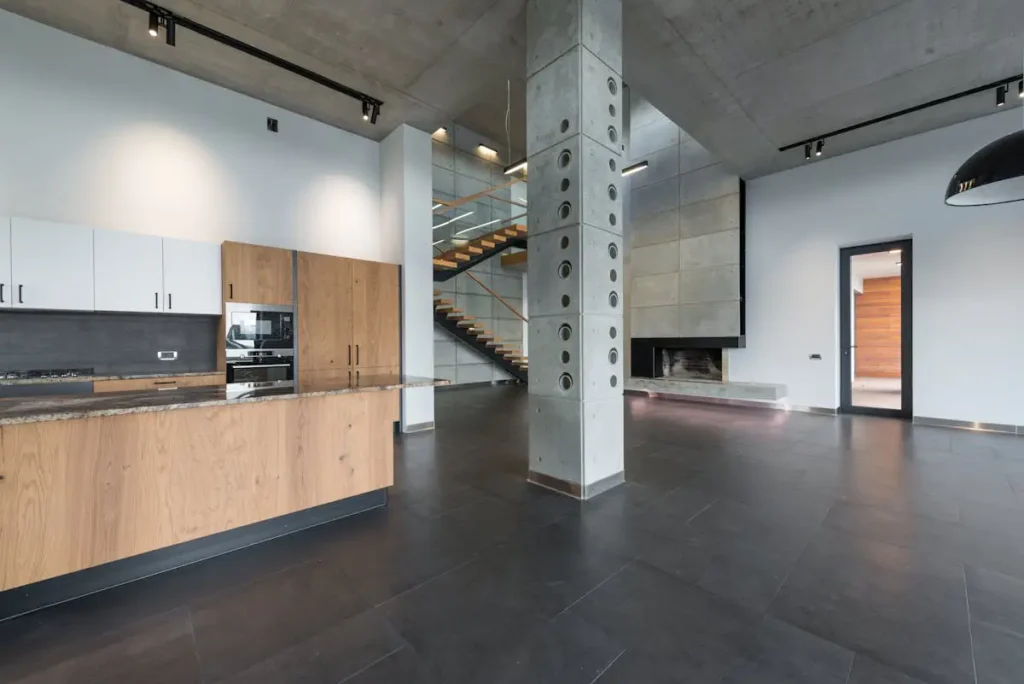
Commercial kitchens are often described in terms of individual pieces of equipment, as if speed and consistency come from choosing the right machine. In practice, commercial kitchens are designed environments. What matters most is how the space is organized so work can move in a predictable flow, with fewer interruptions and fewer risky decisions.
This is where home kitchen thinking breaks down. At home, tools and appliances are usually evaluated one at a time. In commercial settings, the “unit” of performance is the system. Equipment is placed and used in relation to other stations, storage, sanitation zones, and service rhythm.
This is what Kitchen Equipment & Systems means on FoodiJunction. It is not product talk or buying advice. It is an operational view of how infrastructure supports stable service.
What Makes Commercial Kitchen Systems Different From Home Kitchens
The key difference is that commercial kitchens are built around systems, not individual appliances. The goal is not to own versatile equipment. The goal is to create a set of connected zones where tasks repeat in the same order, with minimal conflict between people, heat, food, and cleaning.
Commercial kitchens are designed for repetition. The same actions happen hundreds of times in a shift, so the environment is arranged to reduce variation. Ingredients move through predictable stages. Hot and cold work are separated. Raw handling and finished plating are kept distinct.
Redundancy also matters because service cannot pause. In a home kitchen, one point of failure can be an inconvenience. In a restaurant, it becomes a service disruption. Systems are designed so work can continue when a step slows down, and so no single area becomes a choke point that controls the pace of the entire kitchen.
Layout is the quiet enforcer behind all of this. It shapes where people stand, how far they reach, and what they touch in sequence. When the layout is built around flow, it reduces the number of decisions cooks have to make in the moment.
How Systems Improve Speed Without Sacrificing Safety
In commercial kitchens, speed comes from flow. Work moves faster when tasks are separated into clear zones and each zone has a predictable purpose. When the space signals where raw handling happens, where finishing happens, and where cleaning happens, people spend less time negotiating boundaries.
Task separation also reduces cross-traffic. Many delays begin as small interruptions: two people reaching for the same area, walking through the same narrow path, or waiting for a surface to clear. When zones are defined, movement becomes more directional.
Predictable paths are another part of the system. In a stable kitchen, movement patterns repeat: where food is received, where it is stored, where it is prepped, where it is cooked, and where it is plated. When those paths are clear, the kitchen spends less time improvising routes and more time executing routine motion.
Speed also emerges from fewer decisions. When zones and paths are consistent, many choices disappear. People don’t have to decide where to set something down, where to move next, or how to avoid disrupting someone else. Systems protect safety by reducing uncertainty, often reinforced by technology that supports operational flow, and that same reduction in uncertainty is what allows the kitchen to move quickly without feeling frantic.
How Infrastructure Supports Consistent Food Quality
In commercial kitchens, food quality is protected by environmental control. The goal is not to rely on individual timing instincts across a busy line. It is to create conditions where ingredients and finished components stay within predictable ranges while service moves.
Separation between raw handling and finished food is part of quality control as much as it is safety control. When workspaces are divided, finished components are less likely to be disrupted by raw prep tasks, shared surfaces, or unplanned movement.
Quality also depends on timing coordination across stations. Many dishes are not one action but a sequence that requires different stations to align. Infrastructure supports this by keeping stations close enough to communicate and hand off smoothly, but distinct enough that each one can stay focused.
When systems are strained, quality degrades in predictable ways. Holding zones become overcrowded, staging becomes improvised, and timing alignment weakens. The decline accumulates as temperatures drift, textures soften, and plates lose the steadiness that makes them feel familiar.
Where Kitchen Systems Struggle Under Real Conditions
Kitchen systems are built to absorb variation, but they still have capacity limits. Under steady demand, flow stays smooth because each zone and station can complete its work before the next handoff is needed. When volume spikes or orders arrive in uneven waves, that balance tightens.
Bottlenecks tend to appear where many tasks depend on the same point in the flow. A kitchen can have strong overall design and still stall when one area becomes the shared constraint. If one step cannot keep pace, the system spends more time buffering and less time producing stable handoffs.
Layout constraints can also show up most clearly under pressure. A pathway that feels workable during prep can become crowded during service. These constraints do not always reveal themselves until the kitchen is running at full speed.
When flow breaks, the effects often spread through timing rather than through obvious mistakes. Components sit longer between steps, finished items wait for late elements, and coordination becomes harder because fewer moments feel predictable.
Why Kitchen Systems Matter More Than Individual Equipment
Commercial kitchens are sometimes judged by what they contain, as if results come from owning the right machines. In practice, equipment matters because the system around it makes its use predictable. Equipment performs inside a context. Without that context, it becomes another point of variation.
This is why speed, safety, and quality tend to rise together when systems are well designed. Flow reduces wasted movement and eliminates small conflicts that slow service. Separation protects both food handling and people movement, which lowers friction and keeps timing steadier. Coordination keeps components aligned so finished food arrives in the condition the kitchen intends.
Understanding systems changes how kitchens are evaluated. The question shifts from what equipment is present to what the space makes easy and what it makes difficult. In that view, equipment becomes secondary. The system is what turns capability into reliable service.